What Product Buildup Really Is: The Suffocation Layer
Let's debunk a huge myth right off the bat: hair doesn't 'die' or 'expire' after six months of normal wear.
When people tell us their wig feels like straw, they usually assume the hair has simply reached the end of its life. They're ready to throw a $1,000 piece in the trash. But when we drop that same unit into a clarifying wash basin, the water turns cloudy grey with old wax and silicone. Twenty minutes later, the hair dries like brand-new silk. It's that dramatic.
So what is buildup, really?
It's an invisible plastic crust. Every time you use edge control, hairspray, wax sticks, or silicone serums, those ingredients leave a microscopic film behind. On your natural scalp, sebum and natural shedding help slough those films off. But on a wig or topper, there's no scalp oil and no shedding mechanism. If you don't actively dissolve those layers, they stack on top of each other week after week.
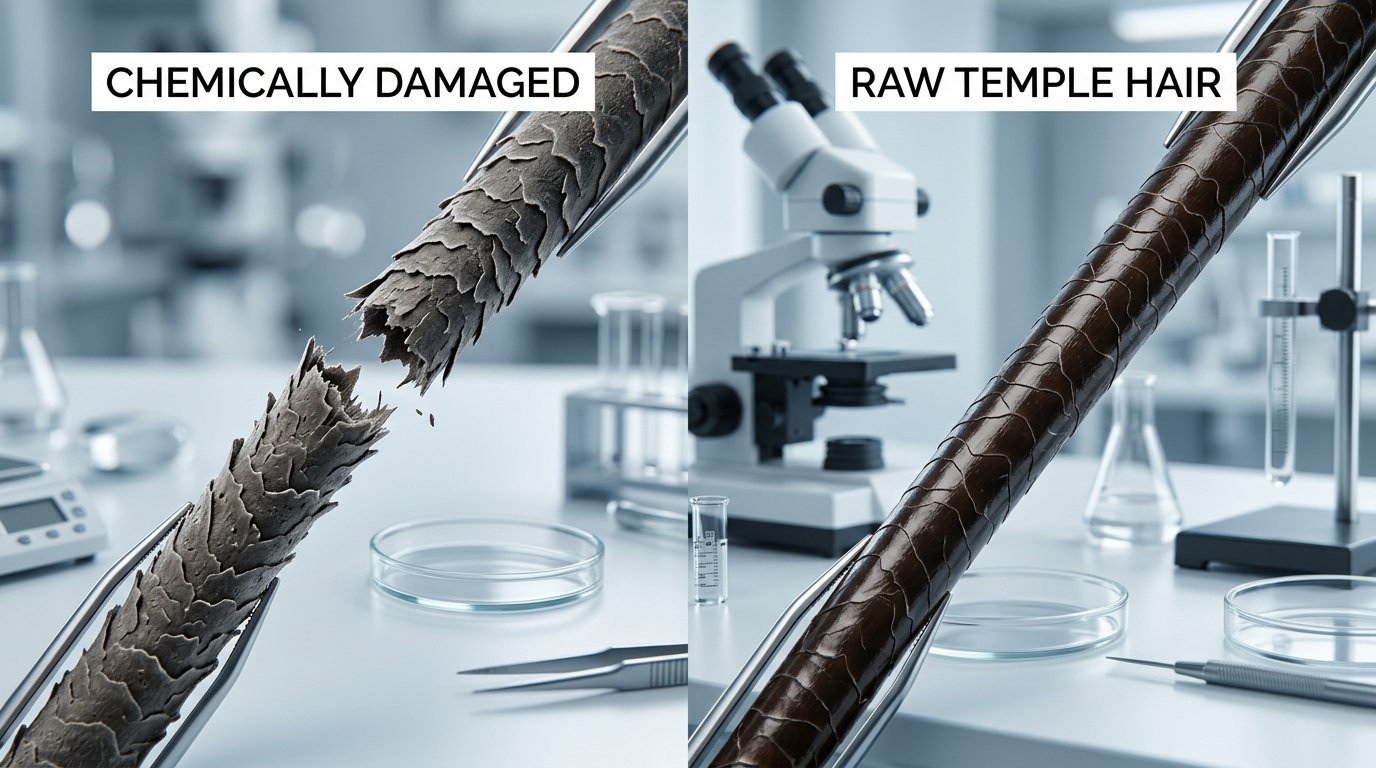
Eventually, that buildup forms a continuous waterproof shield over the strand. It glues your cuticle scales shut, locks out moisture, and makes the hair stiff as a board. When you try to bend or curl the hair, the encrusted scales can't slide naturally—so they crack, split, and snap off. You don't have damaged hair. You have suffocated hair.
The Four Worst Offenders: Wax Sticks, Silicones, Gels & Polyquats
Not all hair products cause buildup at the same rate. Here are the four biggest culprits we see ruining hair systems:
1. Wax Sticks and Heavy Pomades
Wax sticks have exploded all over TikTok for flattening wig crowns and taming flyaways. They work great for thirty seconds. But look at the ingredient list: beeswax, candelilla wax, and microcrystalline wax.
Those waxes have melting points above 140°F (60°C). That means standard warm shower water won't even melt them, let alone rinse them away. Every time you rub a wax stick over your lace parting, that wax solidifies into sticky collars around the roots and lace knots. Within a month, the crown looks greasy, stiff, and attracts lint like a magnet.
2. Non-Water-Soluble Silicones
Silicones give hair instant artificial slip and shine. But heavy silicones like dimethicone, cetearyl methicone, and dimethiconol are completely insoluble in water. You can rinse them under the faucet for an hour and they won't budge. They require a real surfactant shampoo to dissolve. If you only use mild sulfate-free cleansers or co-washes, that silicone layer gets thicker and thicker with every wash.
3. High-Hold Edge Control Gels
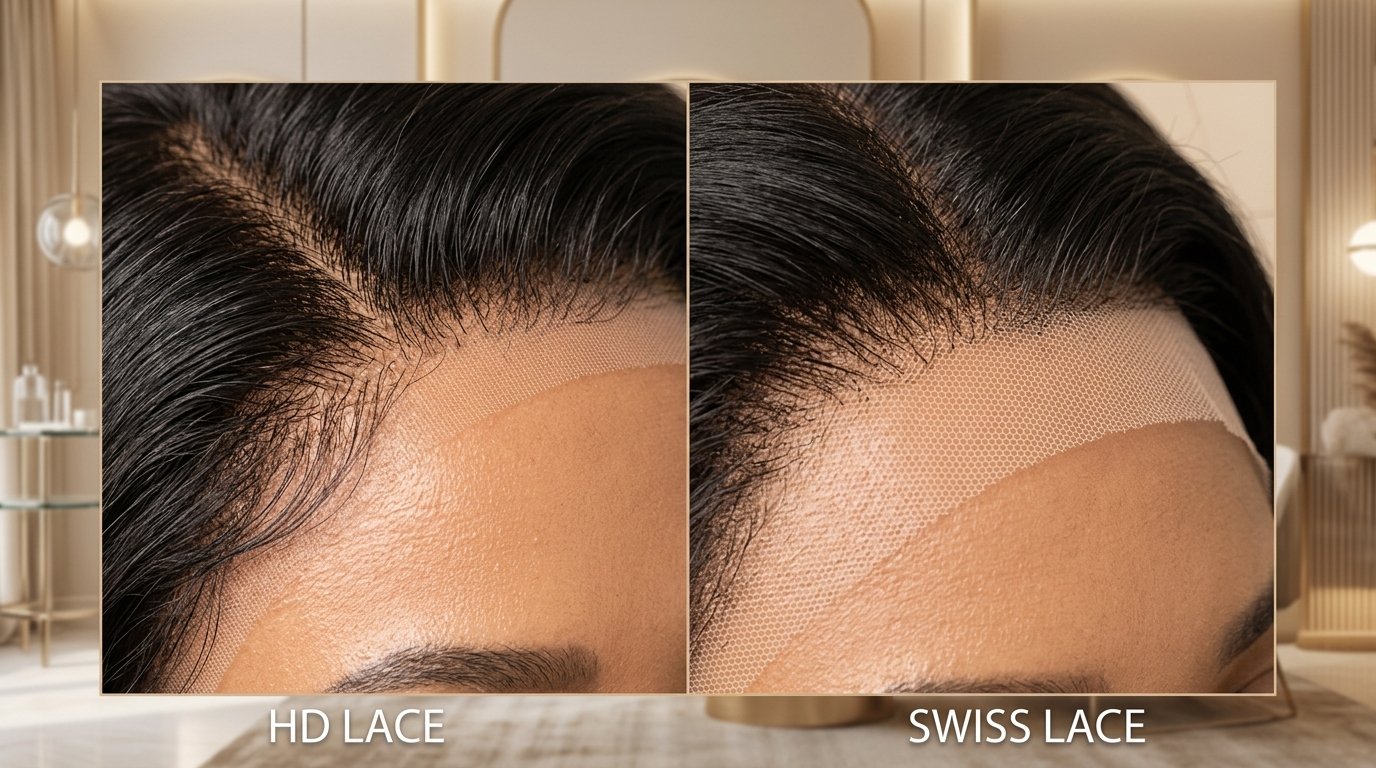
Edge control gels rely on synthetic polymers like PVP and acrylates. When applied daily along your lace hairline, these gels dry into crusty, white crystalline flakes that look like severe dandruff. Worse, when mixed with forehead sweat and foundation makeup, edge control turns into a thick cement that clogs the Swiss lace mesh, completely ruining hairline transparency.
4. Polyquaterniums (Polyquats)
Found in styling mousses and leave-in conditioners, polyquats are positively charged polymers. They bond magnetically to hair strands. That's great for fighting frizz, but over time, they form stubborn complexes with dust and tap water minerals that resist standard washing.
Dead Giveaways: Waxy Dryness, Gummy Wetness & White Flakes
How do you know if your hair has severe buildup? Look for these four unmistakable warning signs:
- The Waxy Drag (Dry Hair): Run your fingers through your dry hair piece. Does it feel coarse, sticky, or waxy, even though you just washed it? Do your fingers feel coated in oil afterward? That's silicone and wax buildup.
- The Gummy Slime (Wet Hair): This is the biggest giveaway of all. When you wet the hair in the sink, does it feel slippery, mushy, and slimy—like it's coated in melted plastic? And then, the moment it dries, does it turn right back into stiff straw? That's heavy polymer occlusion.
- Curls Fall Flat in 30 Minutes: You spend forty minutes curling your hair with a 360°F wand, and half an hour later the curls drop completely straight. Why? Because the heavy wax layer weighs the hair down and blocks heat from reforming internal hydrogen bonds.
- White Residue on Your Comb: Run a fine-tooth black comb through your hair. If the teeth come out coated in a white, chalky, or grey film, that's crystallized product buildup.
Is It Ruined or Just Dirty? The 2-Minute Clarity Test
Before you panic and buy a new wig, do this simple diagnostic test:
Take a small half-inch section of hair from the back of the unit. Fill a small bowl with warm water and mix in two drops of plain, residue-free clarifying shampoo or original blue Dawn dish soap (yes, dish soap—it's an incredible degreaser for isolated testing).
Wash that small strand thoroughly between your fingers for sixty seconds, rinse it completely with clean warm water, and let it air-dry naturally.
Now touch it:
- If the strand dries soft, bouncy, and lightweight: Congratulations, your hair is completely healthy. It was just suffocating under old product. A full clarifying wash will restore the whole unit.
- If the strand feels like rough, frayed sandpaper and snaps in half: That's real structural damage from bleach or acid baths. You'll need deep conditioning or a trim.
The Co-Wash Lie: Why Conditioner Cleansing Makes Buildup Worse
The hair internet loves to tell wig wearers: 'Never use shampoo! Only wash your wigs with conditioner!'
That advice is one of the most destructive things you can do to a luxury hair system.
Conditioners contain heavy fatty alcohols, cationic surfactants, and conditioning oils. They are designed to deposit ingredients onto hair, not remove them. If you 'wash' a wig coated in hairspray and wax sticks with a rich conditioner, you aren't cleaning anything. You're just smearing fresh conditioning oils on top of dirty wax. It's like trying to wash greasy dinner plates with body lotion.
Within two months of co-washing only, your wig will feel heavy, smell stale, and mat into tight knots at the neck. Hair systems need real cleansing surfactants to strip away dirt and styling resins.
| Cleanser Type | What It Dissolves | Safety on Lace Knots | Recommended Frequency |
|---|---|---|---|
| Sulfate-Free Daily Cleanser | Surface dust, light sweat, water-soluble styling products | Very Gentle; zero knot desiccation | Every 10 to 14 days for regular wear |
| Clarifying Surfactant Shampoo | Heavy silicones, styling waxes, edge controls, hairspray resins | Safe when rinsed promptly; strip oils | Once every 3 to 4 weeks as a reset |
| Chelating Shampoo (EDTA/Citric) | Hard water calcium crusts, magnesium, iron, copper discoloration | Safe; removes mineral stiffness | Once a month in hard water areas |
| Co-Wash (Conditioner Only) | Nothing; only deposits fresh conditioning film | Risky; causes knot slippage & heavy buildup | Never use as a primary cleanser on wigs |
The Reset Wash: How to Properly Clarify a Hair System
Here is our step-by-step workshop protocol for safely clarifying a human hair wig or topper without ripping knots or tangling the hair:
- Detangle Completely While Dry: Never put a tangled wig into water. Use a wide-tooth comb to work through the lengths from bottom to top until the comb glides freely.
- Fill a Clean Basin with Lukewarm Water: Never wash wigs under a blasting shower stream. Fill a wash basin or sink with warm water (around 95°F / 35°C).
- Mix in Clarifying Shampoo: Add a tablespoon of a good clarifying shampoo (look for sodium C14-16 olefin sulfonate or sodium laureth sulfate) to the water and swish it into a foamy bath.
- Submerge and Smooth Downward: Lower the wig into the soapy water. Gently submerge it and smooth your hands downward along the hair strands from crown to tips. Never scrub or bunch the hair in circles.
- Let It Soak for 10 Minutes: Walk away for ten minutes. Let the surfactant micelles break down and emulsify stubborn silicones and waxes naturally without mechanical rubbing.
- Rinse Thoroughly with Cool Water: Lift the piece out and rinse under gentle running cool water until the water runs 100% clear with zero bubbles.
- Restore Moisture: Follow up immediately with a lightweight, silicone-free hydrating mask or leave-in conditioner to restore soft slip.
Hard Water Mineral Buildup: Why White Calcium Ruins Softness
Sometimes your buildup doesn't come from styling bottles. It comes straight out of your bathroom tap.
If you live in an area with hard water, your tap water is loaded with dissolved calcium, magnesium, iron, and copper. Every time you rinse your hair, those minerals cling to the negatively charged keratin surface. Over a few months, calcium forms a microscopic chalky crust over your cuticle tiles.
Standard clarifying shampoo cannot dissolve mineral crusts. You need a chelating shampoo containing ingredients like tetrasodium EDTA or disodium EDTA. Chelating agents act like microscopic claw magnets, binding to mineral ions and lifting them off the hair shaft so they rinse harmlessly down the drain. If your hair feels stiff and straw-like despite frequent clarifying, switch to a chelating wash.
Protecting the Lace: How to Wash Hair Without Drying Delicate Knots
While clarifying is essential, you have to be careful with delicate lace knots.
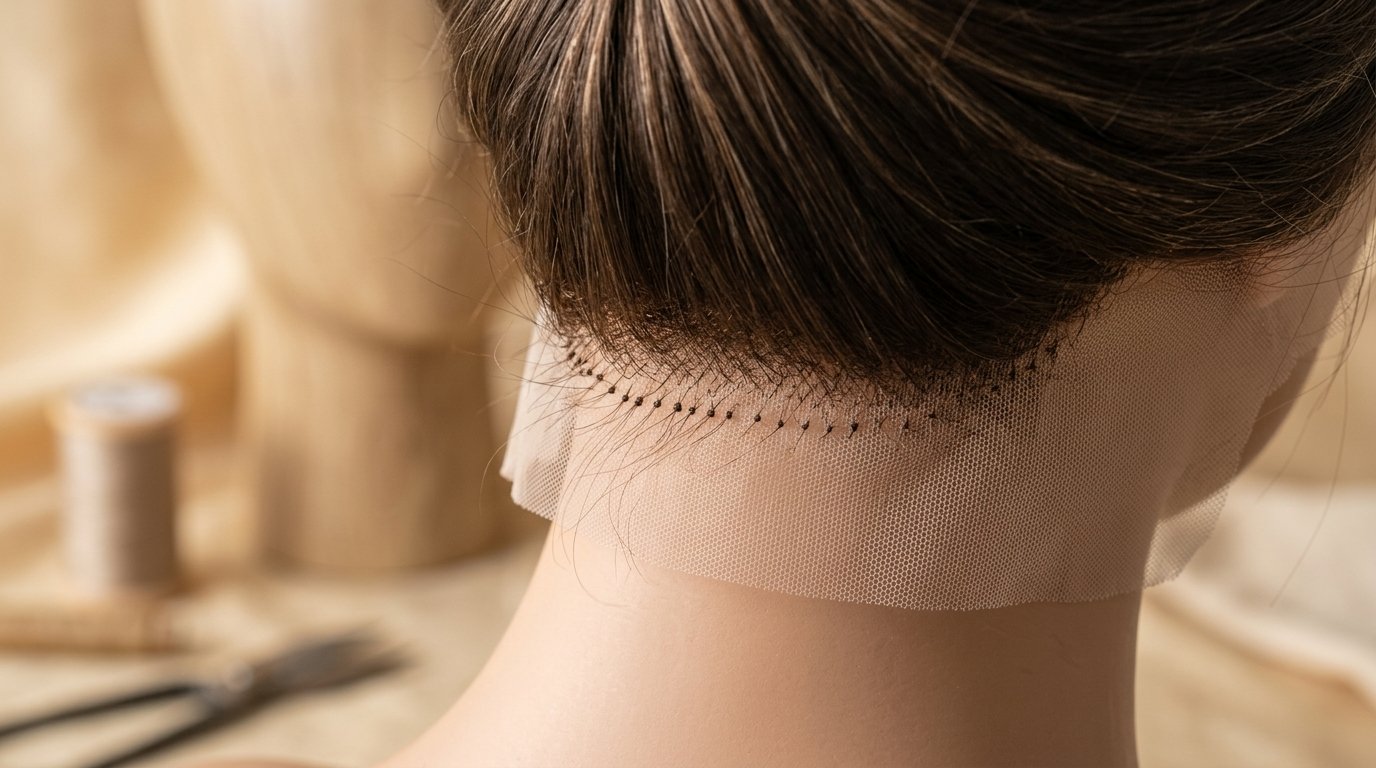
On a hand-tied lace wig or frontal, every single hair is held in place by a tiny, hand-tied knot. If you soak the lace base in harsh clarifying cleansers for an hour, you can strip the natural swelling moisture out of the knot fiber, causing the knots to dry out, loosen, and shed.
When clarifying, keep the strongest shampoo focused on the mid-lengths and ends where product buildup lives. Cleanse the lace base gently and rinse promptly. Never scrub the delicate underside of the lace with rough brushes.
Workshop Spa Resets: Warm Soaks & Micro-Steam Restorations
For pieces with months of neglected buildup, we perform a professional workshop reset:
We place the unit in an ultrasonic warm-water bath calibrated to 105°F with an organic micellar clarifying emulsion. The ultrasonic sound waves create microscopic cavitation bubbles that gently vibrate and dislodge compacted wax collars without any rough friction. We follow that with a cool-mist botanical lipid infusion that penetrates deep into the core.
The result? A unit that looks, moves, and smells like the day it was unboxed.
The Silky Fusion Product Rules: Water-Soluble Care Only
To keep your raw temple hair systems in mint condition, follow these simple product rules:
- ✓ Pick water-soluble leave-in conditioners and heat protectants that rinse away cleanly.
- ✓ Use wax sticks sparingly—never cake them onto lace partings or hairline edges.
- ✓ Avoid cheap edge controls packed with drying alcohols and heavy petroleum waxes.
- ✓ Clarify your hair system every 3 to 4 weeks to wipe the slate clean.
- ✓ Use chelating shampoo once a month if your home has hard tap water.
- ✓ Never rely on co-washing as your primary method of cleansing hair systems.
Clean hair is bouncy hair. Keep the buildup off, and your hair will hold curls, shine naturally, and glide effortlessly for years.