Medical Cranial Prosthesis vs Fashion Wig: What's the Real Difference?
A cranial prosthesis isn't just a marketing buzzword for an expensive wig.
In clinical medicine and health insurance billing, a cranial prosthesis is classified as a custom-fitted durable medical device. It's prescribed by oncologists, dermatologists, and trichologists for individuals experiencing pathological hair loss caused by chemotherapy, cranial radiation, alopecia universalis, or scalp trauma.
Standard fashion wigs simply aren't built for hairless scalps.
Most commercial wigs use machine-sewn track wefts, coarse polyester lace, scratchy interior seams, and heavy metal combs designed to dig into existing bio hair. If you put that kind of cap on a scalp undergoing cytotoxic chemotherapy, it feels like wearing a helmet lined with sandpaper.
Why does that happen?
Chemotherapy drugs target rapidly dividing cells throughout your entire body. That shuts down hair follicle mitosis, but it also slows epidermal cell turnover. Scalp skin thins by up to thirty percent. Natural sebum production drops to near zero. Nerve endings become inflamed and hypersensitive—a clinical condition known as scalp dysesthesia. In this vulnerable state, even a tiny 0.2mm nylon seam or an acidic dye residue causes burning, blisters, and painful contact dermatitis. A medical cranial prosthesis must be engineered from the inside out to protect fragile skin.
The Weight Trap: Why 110g to 145g is the Strict Non-Negotiable
Here's a dirty secret of the beauty wig industry: commercial brands pack wigs with extra hair because buyers equate heavy density with value.
Most mass-market wigs weigh between 220 and 350 grams. That's nearly three-quarters of a pound hanging off your head.
For an oncology patient, that weight is dangerous.
When you're dealing with treatment-related fatigue and neck pain, wearing a 300-gram wig for eight hours triggers acute cervical strain and severe tension headaches. More importantly, that extra mass creates downward gravitational drag. The heavier the wig, the tighter the perimeter band has to be so the unit won't slip backward.
In our medical prosthesis workshop, we follow a strict rule: total finished weight must stay between 110 and 145 grams.
That delivers a completely natural 120% to 130% hair density that mirrors a healthy biological head of hair without overloading the cervical spine or putting mechanical pressure on delicate recovering hair buds.
| Wig Category | Average Weight | Scalp Comfort (Chemo/Alopecia) | Cervical & Follicle Impact |
|---|---|---|---|
| Mass-Market Beauty Wig | 220g – 350g | Very poor; hot, scratchy, and painful | Severe neck strain, headaches, follicle friction |
| Commercial 'Medical' Synthetic | 160g – 210g | Moderate; stiff synthetic fibers trap heat | Moderate heat rash; synthetic fiber friction |
| Silky Fusion Bespoke Cranial Prosthesis | 110g – 145g | Exceptional; feels like a featherweight silk scarf | Zero tension, zero neck fatigue, protects new growth |
Inside-Out Cap Architecture: Silk Crown, Monofilament & Silicone Grips
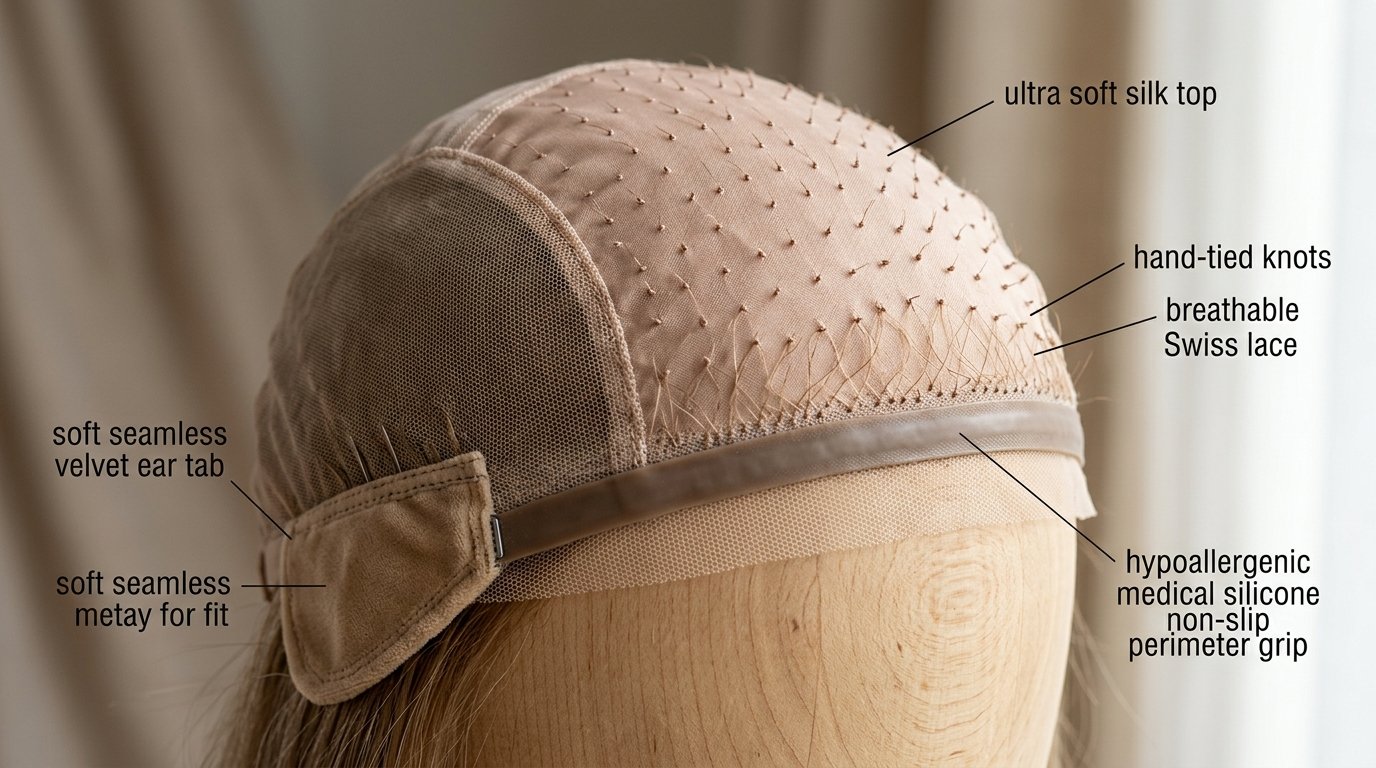
Look at the inside of a true cranial prosthesis, and you'll see a masterpiece of ergonomic engineering.
We don't use rough machine tracks or exposed lace grids against the skin. Instead, every contact surface's chosen for biocompatibility:
- Pure Mulberry Silk Crown (French Top): In a standard lace wig, thousands of hair knots poke through the underside, rubbing directly against the scalp. In our French silk tops, hair is knotted into an inner layer, then pulled through a second layer of whisper-soft pure silk. The underside that touches your head is completely knot-free and silky smooth.
- Medical-Grade Silicone Perimeter Grips: When you don't have bio hair, metal combs won't work and toxic lace adhesives can burn your skin. We embed soft, medical-grade silicone micro-panels along the temples and nape. The silicone uses natural skin friction and body warmth to create a secure, slip-free grip without clamping pressure.
- Seamless Velvet-Lined Ear Tabs: Traditional wigs use stiff wire stays covered in rough cotton. We line our flexible ear tabs with plush medical velvet, preventing irritation around glasses and sensitive ear cartilage.
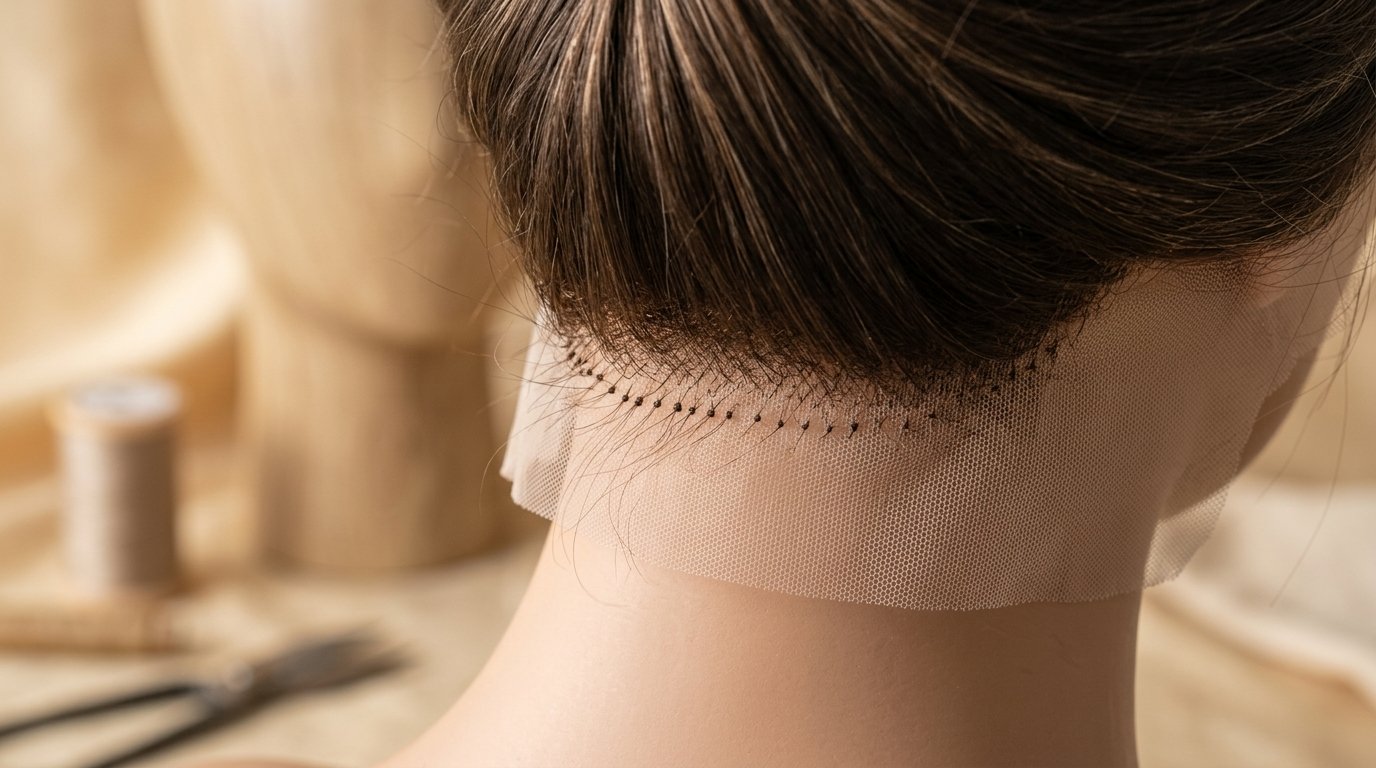
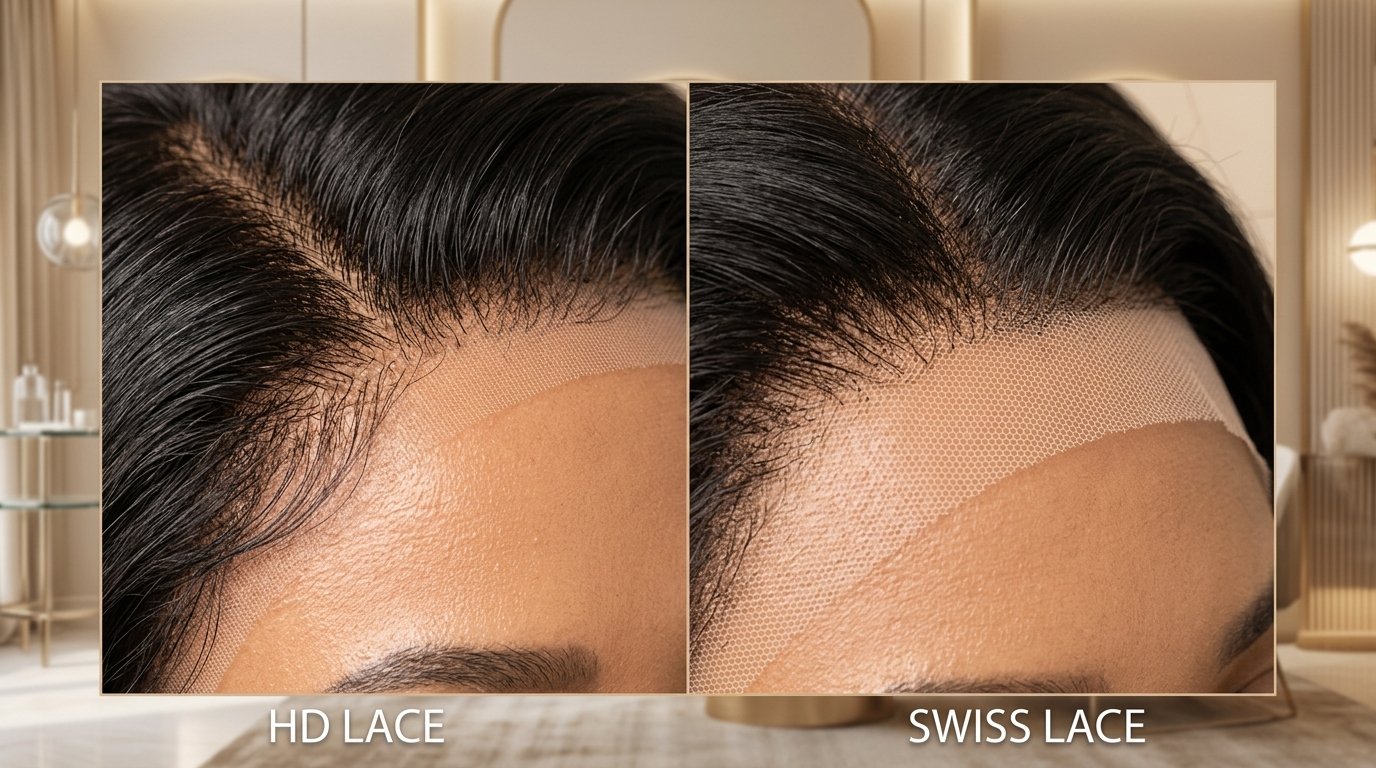
- Featherlight Swiss HD Lace Hairline: Across the front hairline, single-hair micro-ventilation into ultra-soft Swiss lace ensures the hair looks like it's growing straight from your scalp pores.
Chemical Purity: Why Raw Unprocessed Hair is Vital for Chemo Scalps
Why can't you just use standard processed hair for a cancer wig?
Because cheap hair bundles are soaked in industrial chemicals.
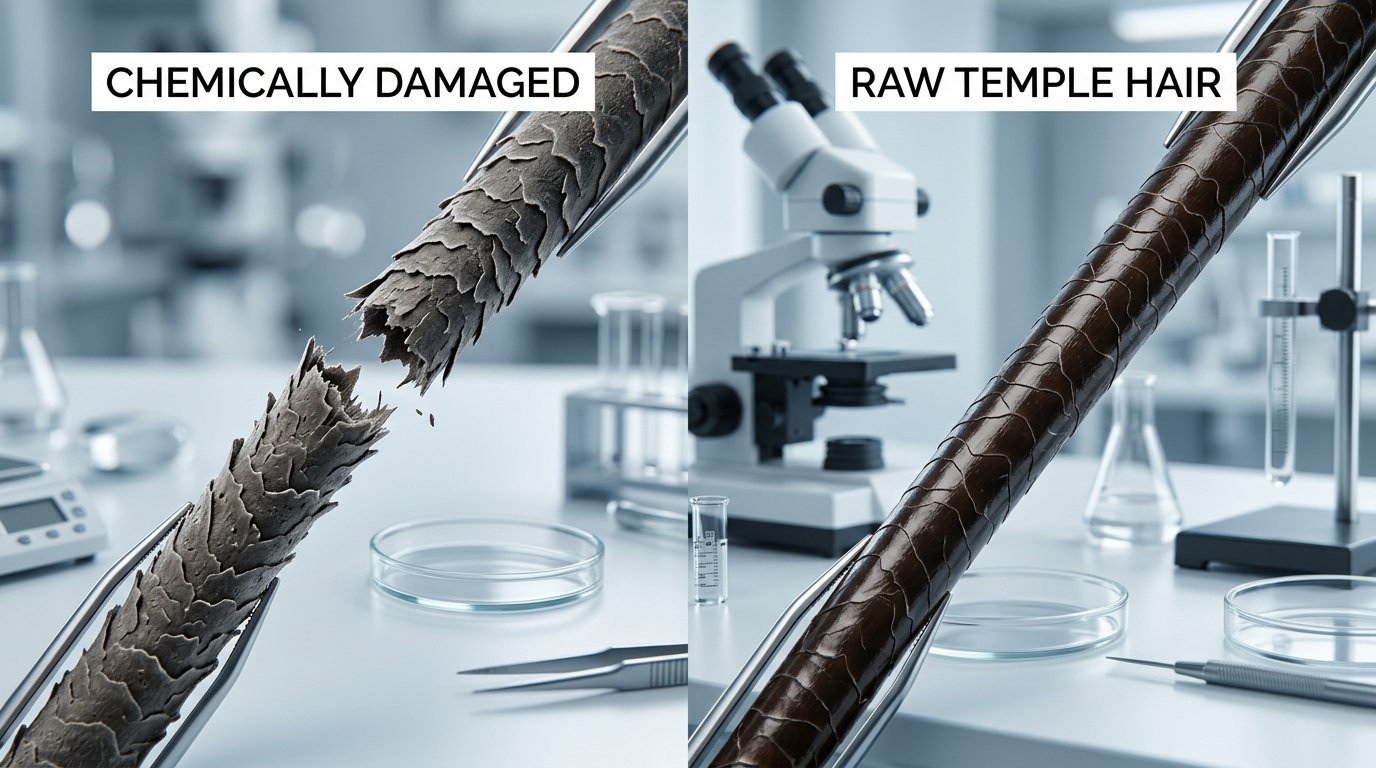
As we've exposed in our workshop testing, mass-produced processed hair goes through aggressive acid baths, heavy sulfur-based bleaches, and thick silicone oils to disguise broken cuticles. When that chemically altered hair warms up against a feverish, sweating scalp, residual acids and synthetic dyes off-gas directly onto hyper-permeable skin.
That's why so many cancer patients experience sudden scalp burning, severe contact dermatitis, and nausea when wearing synthetic or chemically processed human hair wigs.
For a medical cranial prosthesis, raw unprocessed single-donor hair is mandatory. Our hair is sourced directly from South Indian temples, cleansed exclusively with organic botanical cleansers, and ventilated in its natural virgin state. There are zero silicones, zero acid baths, and zero synthetic coatings. It's completely non-toxic and hypoallergenic.
Insurance Billing & HCPCS A9282: How to Get Reimbursed
Did you know that many health insurance providers cover the cost of a cranial prosthesis?
Most patients don't know this because insurance companies rarely volunteer the information. Under the Healthcare Common Procedure Coding System, a cranial prosthesis is filed under code HCPCS A9282 (Cranial Prosthesis / Hair Prosthesis).
Here's the exact step-by-step process we guide our clients through to secure reimbursement:
- Get a Medical Prescription from Your Doctor: Ask your oncologist or dermatologist for a formal prescription. Golden rule: the doctor must write 'Cranial Prosthesis for Alopecia Secondary to Chemotherapy' (or your specific medical diagnosis code, like ICD-10 L63.9). They must never write the word 'wig' on the prescription. If they write 'wig', insurance will deny it as a cosmetic item.
- Obtain an Itemized Medical Invoice: We issue a certified itemized medical invoice detailing HCPCS Code A9282, our business medical vendor tax ID, and specific diagnostic line items.
- Check Out-of-Network Benefits: Many private insurance plans cover 50% to 100% of the cost under durable medical equipment (DME) benefits. If you've got an HSA (Health Savings Account) or FSA (Flexible Spending Account), you'll also use pre-tax dollars to cover any remaining copay.
The $4,000 Hospital Boutique Racket: Ethical Pricing Breakdown
One of the most heartbreaking things we see in this industry is hospital-affiliated boutiques exploiting vulnerable patients.
A woman receives a terrifying cancer diagnosis. The hospital boutique offers to 'take care of everything' and hands her a synthetic or heavily processed wig with an invoice for $3,500 to $5,000.
That's an unconscionable 800% markup on a factory unit that costs less than $250 to produce.
We reject that entirely. At Silky Fusion, we build genuine bespoke cranial prostheses by hand using pure raw temple hair and medical Swiss foundations. Our direct-to-patient pricing runs between $950 and $1,650—giving you world-class bespoke craftsmanship, full custom cranial measurements, and pure virgin hair at an honest, ethical price.
Daily Care Protocols for Hypersensitive Scalps & Follicle Recovery
Taking care of your scalp while wearing a medical prosthesis is just as important as the piece itself:
- Wear a Mulberry Silk or Bamboo Liner: If your scalp feels particularly tender, place a pure mulberry silk or seamless bamboo liner cap between your head and the prosthesis. It acts as an ultra-gentle friction buffer.
- Cleanse with Calming Hydrosols: Don't use heavy shampoos on a bare scalp. Wipe your skin down nightly with pure organic chamomile or lavender hydrosol to calm inflammation and remove sweat salts.
- Never Sleep in Your Piece: Always remove your cranial prosthesis at night. Your scalp needs open airflow to regulate temperature and maintain healthy microflora while you rest.
- Protect Emerging Baby Hairs: As chemotherapy finishes and tiny new hair buds begin to sprout, the soft silk interior of our cap protects those fragile new shafts from mechanical friction, allowing them to grow in strong and healthy.
The Silky Fusion Medical Standard: Bespoke Craftsmanship with Dignity
Hair loss during medical treatment isn't just about appearance. It's about dignity, privacy, and feeling like yourself when you look in the mirror.
Every cranial prosthesis we craft is custom-molded to your unique head shape. Through a private one-on-one video consultation, we review your natural hair photos, measure your exact cranial contours, and select raw hair bundles that match your original texture, color undertones, and natural hairline whorls.
When you put your Silky Fusion piece on, you won't feel heavy synthetic heat or painful pressure. You'll feel comfortable, secure, and completely yourself. That's our promise to you.